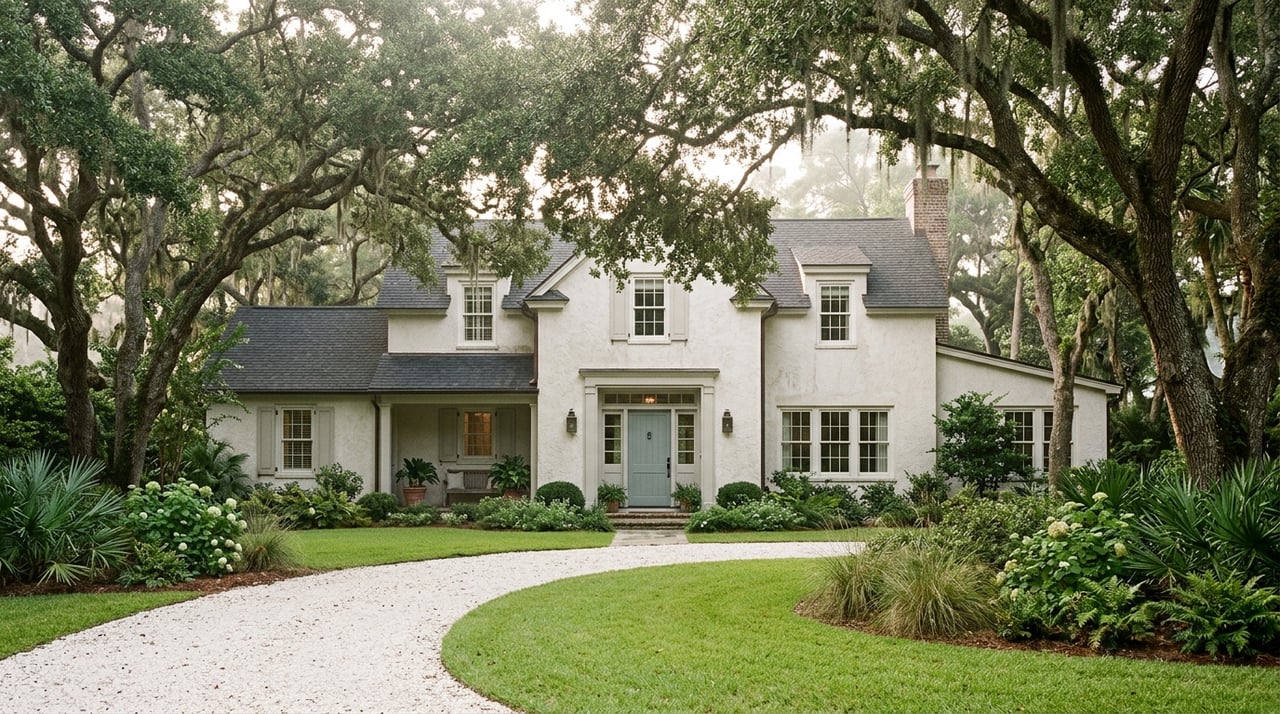
If you have ever wondered why one West of Trail home commands a dramatically different price than another just a few blocks away, the answer usually comes down to the micro-neighborhood. In Sarasota, the West of Trail label is helpful, but it does not tell the full pricing story. When you understand how location, lot size, water access, and rebuild status work together, you can read the market with much more confidence. Let’s dive in.
Why West of Trail values vary so much
West of Trail is not one single price band. It is a collection of smaller pockets, each with its own pricing patterns, lot characteristics, and buyer appeal.
That difference shows up clearly in current market snapshots. Sarasota's citywide typical home value is about $412,112, while Harbor Acres is around $4.68 million, Cherokee Park is around $2.92 million, and Oyster Bay Estates shows a median listing price of about $4.695 million. Those numbers make it clear that West of Trail behaves more like a set of micro-markets than one uniform neighborhood category.
Sarasota County Property Appraiser guidance helps explain why. Parcel value is influenced by comparable sales, location, neighborhood market parameters, size, zoning, and age or year built. In real terms, that means two homes near each other can still appraise and sell very differently.
Harbor Acres pricing dynamics
Harbor Acres sits at the top
Among these West of Trail pockets, Harbor Acres stands out as the highest-priced mainland bayfront submarket in this group. Zillow's April 2026 neighborhood data places the average home value at $4.68 million, while Realtor.com reports a median listing price of $4.9 million and about $1,116 per square foot across 20 active listings.
A big reason is the range and quality of waterfront opportunities. Recent examples include parcels from about 0.33 to 0.41 acres, a 0.69-acre waterfront lot, and listings with broad bay frontage. Some properties are being valued as luxury homes, while others are being valued primarily for the land.
New construction changes the baseline
Harbor Acres also reflects a strong rebuild trend. Current listing remarks note that almost all original homes have been replaced by new construction.
That matters because buyers may not be comparing one finished house to another. In many cases, they are comparing frontage, dockage potential, lot size, and the value of building something new. That tends to keep pricing elevated and can widen the gap between nearby properties.
Cherokee Park's mix of character and scale
Cherokee Park has a long build-out story
Cherokee Park offers a different pricing profile. The neighborhood was platted in 1926, with its westernmost portion replatted in 1940, and many lots were not developed until after World War II.
Today, that long timeline still shows up in the housing stock. You can find original homes with historic character alongside much newer construction, which means buyers often weigh charm, lot size, and renovation needs very differently from property to property.
Estate lots support value
Zillow places Cherokee Park around $2.92 million. Recent parcel examples show 0.46-acre lots as common, with larger sites around 0.52, 0.69, and 0.92 acres appearing in current listings.
That kind of lot scale matters. A 1936 home on 0.52 acres and a 2018 home on 0.92 acres may both be in Cherokee Park, but they are competing in very different ways. One may appeal for architectural character, while the other may command a premium for newer construction and a larger homesite.
San Remo shows how water and rebuilds shape price
San Remo has a split market
San Remo is a strong example of how pricing can vary even within a small enclave. Although the plat dates to the 1920s, the neighborhood did not become fully established until the 1950s.
By final build-out, the area included 55 waterfront lots and 14 interior lots, many larger than the original plat. That mix still affects pricing today because waterfront and interior homes do not move in lockstep.
Similar area, very different values
Current listings in San Remo show a wide spread. Examples include a 1956 waterfront home on about 0.42 acres listed near $3.42 million, a 2021 waterfront rebuild on about 0.38 acres around $7.995 million, and a roughly one-acre waterfront estate around $6.9 million.
Those examples show why the neighborhood name alone is not enough. Age, renovation level, lot size, and water exposure can shift value substantially, even before you get to finishes or architectural style.
Oyster Bay rewards careful comparison
Oyster Bay blends several property types
Oyster Bay combines inland homes, bayfront homes, and newer custom residences. Realtor.com's April 2026 snapshot shows a median listing price of $4.695 million, about $1,037 per square foot, 15 active listings, and a median 74 days on market.
That variety makes Oyster Bay especially important to read carefully. A home with dock access and direct Roberts Bay views is not truly competing with a rebuilt inland property, even if both share the same broader neighborhood label.
Street-by-street differences matter
Representative listings include a 0.42-acre home built in 1970 with dock access and direct bay views, a rebuilt one-third-acre home in flood zone X, and a custom residence on more than half an acre. That is a wide spread of land characteristics and improvement quality.
In practical terms, Oyster Bay values can change fast from one street to the next. The best comparison is not simply whether a home is in Oyster Bay, but whether it matches another property in water type, lot scale, and improvement level.
The biggest drivers of value
Waterfront hierarchy matters most
Across West of Trail, water access often carries more weight than a ZIP code or neighborhood label. Listings in Harbor Acres and San Remo regularly distinguish protected sailboat water, deep-water harbor frontage, and no-bridge access to the Gulf, while Oyster Bay listings highlight Roberts Bay dockage and bay views.
That creates a hierarchy within the same neighborhood. A parcel with more desirable water conditions can command a meaningfully different value than an inland property or even another waterfront lot with less favorable access.
Lot size and frontage create premiums
Larger homesites are a major value driver in these neighborhoods. Harbor Acres often shows lots around 0.33 to 0.41 acres, but larger waterfront parcels also appear. Cherokee Park frequently shows about 0.46-acre parcels, with some lots nearing one acre, and San Remo includes waterfront sites from about 0.38 to 0.98 acres.
More land can support privacy, more usable frontage, dock potential, and greater rebuild flexibility. In a market where many buyers think long term, lot dimensions can be just as important as the house itself.
Age and rebuild status change the comparison
West of Trail buyers are not always paying for the same thing. In Harbor Acres, many purchases reflect new-construction expectations. In Cherokee Park, original homes from the 1930s can still coexist with modern compounds. In San Remo, 1950s ranch homes share the market with later teardowns and custom rebuilds.
Because of that, a renovated older home on a smaller lot may not be the right comparable for a larger land-value parcel or a newer custom house. You have to compare like with like.
Convenience still supports pricing
Location within Sarasota also helps support these values. Harbor Acres is often marketed for proximity to Sarasota Memorial Hospital, Southside Village, downtown Sarasota, and nearby beaches. San Remo listings emphasize access to Siesta Key, downtown, and Southside Village, while Oyster Bay listings note access to The Field Club, Southside Village, and Siesta Key.
That in-town coastal convenience can keep these neighborhoods in a different pricing tier from many other parts of Sarasota. Buyers are often paying for both the property and the ease of living nearby.
Flood exposure can affect demand
Flood exposure is another key factor, especially on bayfront streets. Redfin's Harbor Acres page labels the neighborhood as facing extreme flood risk, with 99 percent of properties at risk of severe flooding over the next 30 years.
That does not erase demand, but it can affect carrying costs and buyer decision-making. Insurance considerations and perceived risk can influence how buyers value an otherwise exceptional property.
How buyers and sellers should read pricing
Compare the right details
The most useful way to evaluate a West of Trail home is to compare the same water type, similar lot size, similar age, and similar rebuild status. That approach aligns with Sarasota County Property Appraiser guidance and better reflects how buyers actually sort properties.
Without that context, list prices can be misleading. A home may look expensive or underpriced at first glance, but the real story may be in the frontage, dockage, flood profile, or redevelopment potential.
Sellers need precise pricing
If you are selling, your pricing strategy should be anchored to your exact street and property characteristics, not just the neighborhood name. A broad Harbor Acres, Cherokee Park, San Remo, or Oyster Bay label is only the starting point.
This is where careful presentation and market analysis matter. In a fragmented luxury market, pricing too high or too low can cost you attention, time, or leverage.
Buyers need a micro-market lens
If you are buying, it helps to think in smaller layers. Ask whether a home is being valued as a finished residence, a renovation opportunity, or primarily as land.
That mindset can help you avoid false comparisons. Two homes in the same West of Trail area may share a map pin, but if one has deeper water, more frontage, newer construction, or a much larger lot, they may belong in different value categories.
Why local guidance matters in West of Trail
West of Trail is one of Sarasota's clearest examples of why neighborhood expertise matters. The premium is real, but it is built from smaller premiums that stack together, including water access, lot scale, flood exposure, age, and rebuild quality.
If you are preparing to buy or sell in Harbor Acres, Cherokee Park, San Remo, or Oyster Bay, understanding those layers can help you make more confident decisions. For tailored neighborhood guidance, pricing insight, and a concierge-level experience, connect with Michelle Silva.
FAQs
How do West of Trail micro-neighborhoods affect Sarasota home values?
- West of Trail home values can vary widely because pricing is influenced by the specific micro-neighborhood, water access, lot size, frontage, age of the home, and whether the property is valued as a finished residence or as land for a rebuild.
What makes Harbor Acres more expensive than other West of Trail areas?
- Harbor Acres stands out for its high concentration of premium waterfront homes, larger bayfront opportunities, and a strong pattern of new construction replacing older homes, which supports some of the highest pricing in Sarasota's mainland coastal market.
Why do Cherokee Park home prices vary so much?
- Cherokee Park includes a mix of older homes and newer construction on estate-sized lots, so values can shift based on lot size, home condition, architectural character, and whether a buyer is prioritizing charm, land, or a newer residence.
What should buyers compare when looking at San Remo or Oyster Bay homes?
- Buyers should compare water type, lot size, frontage, age, and rebuild status because homes in San Remo and Oyster Bay can differ significantly even within the same neighborhood boundaries.
Does flood risk impact West of Trail property values?
- Yes. Flood exposure can affect insurance costs, carrying costs, and buyer demand, which can influence pricing, especially for bayfront properties.
How should sellers price a home in a West of Trail micro-neighborhood?
- Sellers should price based on the exact street, water exposure, lot characteristics, and improvement level of the property rather than relying only on the broader neighborhood name.